
Dental Fillings: Types, Procedure & Benefits
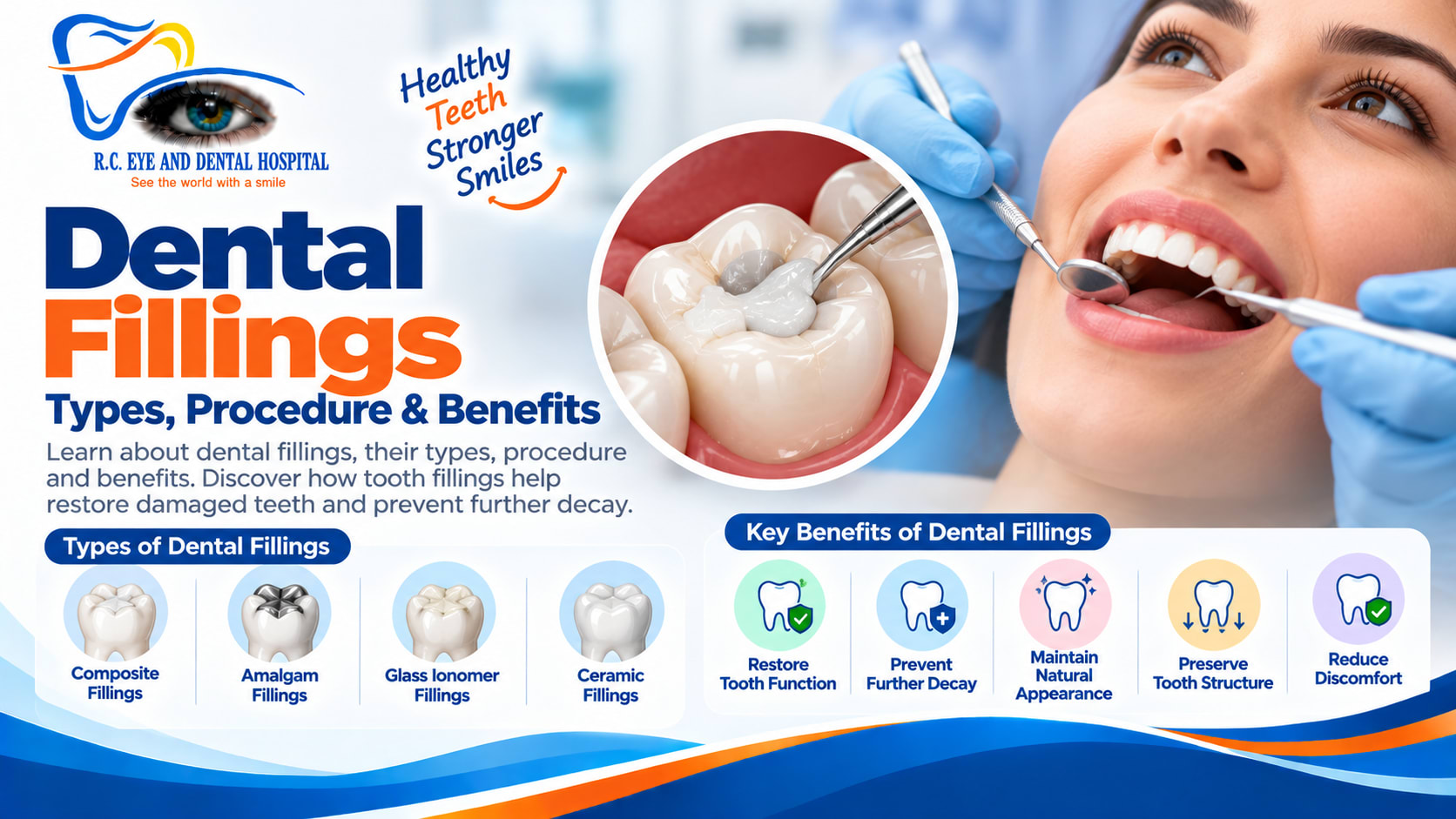
Dental Fillings: Types, Procedure & Benefits
R.C. Eye & Dental Hospital, Bijnor
What Are Dental Fillings?
Dental fillings are a common dental treatment used to repair teeth damaged by cavities or minor tooth decay. When bacteria gradually damage the tooth structure, a dentist may remove the decayed portion and fill the affected area with a suitable dental material.
A dental filling restores the tooth's shape and function while helping prevent further damage to the treated area.
What Are the Different Types of Dental Fillings?
Dentists may recommend different filling materials depending on the location of the cavity, the extent of damage, and individual dental needs.
1. Composite Resin Fillings
Composite fillings are tooth-coloured materials designed to blend with natural teeth. They are commonly used for visible teeth and smaller restorations.
2. Amalgam Fillings
Amalgam fillings are made from a mixture of metals. They are known for their durability and have traditionally been used in back teeth.
3. Glass Ionomer Fillings
Glass ionomer materials can release fluoride and are used in selected dental situations, including certain small restorations.
4. Ceramic Fillings
Ceramic fillings, including porcelain restorations, offer a natural appearance and may be recommended for selected damaged teeth.
What Is the Dental Filling Procedure?
A dental filling procedure generally involves the following steps:
Dental Examination: The dentist examines the affected tooth and may recommend an X-ray if required.
Removal of Decay: The decayed portion of the tooth is carefully removed.
Cleaning the Area: The prepared cavity is cleaned to remove debris and bacteria.
Filling Placement: The selected filling material is placed into the prepared area.
Shaping and Polishing: The filling is shaped and adjusted to ensure a comfortable bite.
The procedure and time required depend on the size and location of the cavity.
What Are the Benefits of Dental Fillings?
Dental fillings offer several benefits:
Restore Tooth Function: Help you chew and bite comfortably.
Prevent Further Decay: Seal the treated area and help protect the remaining tooth structure.
Maintain Natural Appearance: Tooth-coloured fillings can blend with surrounding teeth.
Preserve Tooth Structure: Help save a tooth before more extensive treatment becomes necessary.
Reduce Discomfort: Treating decay may help relieve cavity-related sensitivity or pain.
When Do You Need a Dental Filling?
You may need a dental examination if you experience:
Tooth sensitivity to hot, cold, or sweet foods.
Visible holes or dark spots on teeth.
Pain while chewing.
Food frequently getting stuck in a particular tooth.
Persistent tooth discomfort.
Some cavities do not cause noticeable symptoms in their early stages. Regular dental check-ups can help identify them sooner.
Dental Filling Treatment at R.C. Eye & Dental Hospital, Bijnor
Ignoring tooth decay can allow the damage to progress and may eventually require more extensive dental treatment.
At R.C. Eye & Dental Hospital, Bijnor, patients can seek dental evaluation and guidance regarding suitable tooth restoration options.
If you notice sensitivity, visible cavities, or discomfort while chewing, consult a dentist for timely assessment.
Remember: Early treatment can help preserve your natural teeth and maintain a healthy smile.
Need Expert Consultation?
Our specialists are here to help you with any eye or dental concern.