
Dental Plaque and Tartar: What’s the Difference?
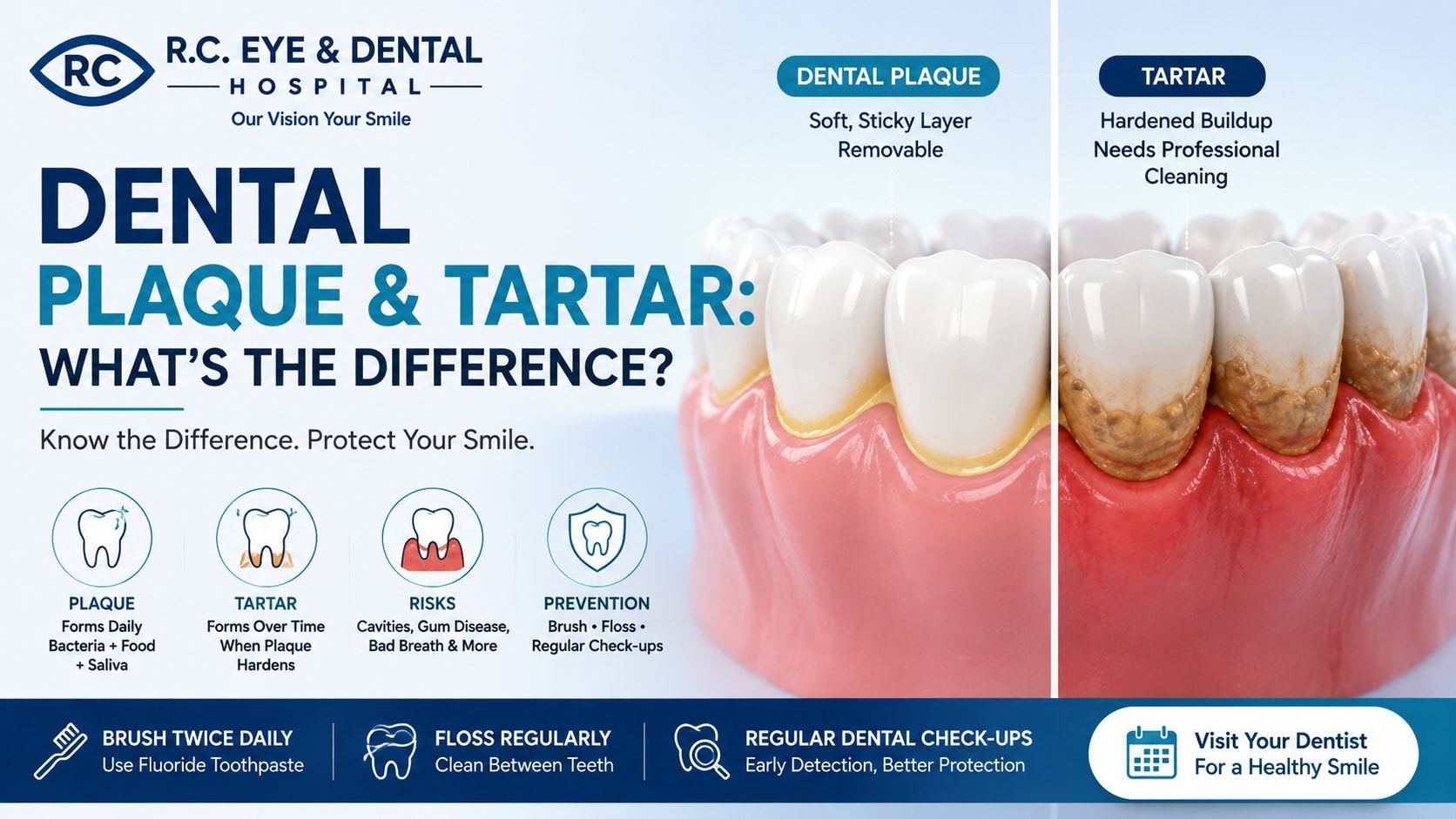
Dental Plaque & Tartar: What’s the Difference?
Dental plaque and tartar are two common dental problems that can affect your teeth and gums. Although they are related, plaque and tartar are not the same thing. Understanding the difference can help you maintain better oral hygiene and prevent gum problems.
What Is Dental Plaque?
Dental plaque is a soft, sticky layer of bacteria that continuously forms on the surface of your teeth. It develops when bacteria in the mouth mix with food particles and saliva.
Plaque can usually be removed by regular brushing and flossing. However, if it is not cleaned properly, it can remain on the teeth and eventually harden into tartar.
Plaque buildup can contribute to:
- Cavities
- Bad breath
- Gum inflammation
- Bleeding gums
What Is Tartar?
Tartar, also called dental calculus, is hardened plaque. When plaque remains on the teeth for too long, it can mineralize and become hard.
Unlike soft plaque, tartar cannot usually be removed effectively with a toothbrush at home. Professional dental cleaning may be required to remove it safely.
Tartar commonly develops near the gumline and can contribute to gum irritation and disease.
Plaque vs Tartar: What's the Difference?
The simplest way to understand the difference is:
Plaque = Soft and removable
Tartar = Hardened and requires professional cleaning
| Plaque | Tartar |
|---|---|
| Soft and sticky | Hard and firmly attached |
| Forms continuously | Develops from untreated plaque |
| Can be reduced by brushing and flossing | Usually requires professional cleaning |
| Can contribute to cavities and gum problems | Can increase the risk of gum disease |
How Can You Prevent Plaque and Tartar?
Good oral hygiene is the best way to control plaque and reduce tartar formation.
Brush Twice a Day
Brush your teeth gently twice a day using a fluoride toothpaste. Make sure to clean along the gumline as well.
Floss Regularly
Flossing helps remove plaque and food particles from areas that a toothbrush may not reach.
Limit Sugary Foods
Frequent consumption of sugary foods and drinks can encourage bacterial activity and increase the risk of dental problems.
Get Regular Dental Check-ups
Regular dental examinations allow your dentist to identify plaque buildup, tartar, cavities, and gum problems early.
Can Tartar Be Removed at Home?
It is not recommended to scrape or remove tartar yourself using sharp objects or home tools. This can damage the enamel or gums and may cause injury.
If you have visible hard deposits on your teeth, professional dental cleaning is the safer option.
Dental Care at R.C. Eye & Dental Hospital
At R.C. Eye & Dental Hospital, dental care focuses on prevention, early detection, and personalized treatment. Professional dental evaluation can help identify plaque and tartar buildup along with other oral health concerns.
Regular dental cleaning and proper home care can help maintain healthier teeth and gums.
Conclusion
Plaque is a soft bacterial film that forms on teeth, while tartar is hardened plaque that cannot usually be removed through regular brushing. Preventing plaque buildup is the best way to reduce tartar formation.
Maintaining good brushing and flossing habits, along with regular dental check-ups, can help protect your teeth and gums and support long-term oral health.
Need Expert Consultation?
Our specialists are here to help you with any eye or dental concern.