
Diabetic Macular Edema: Symptoms & Treatment
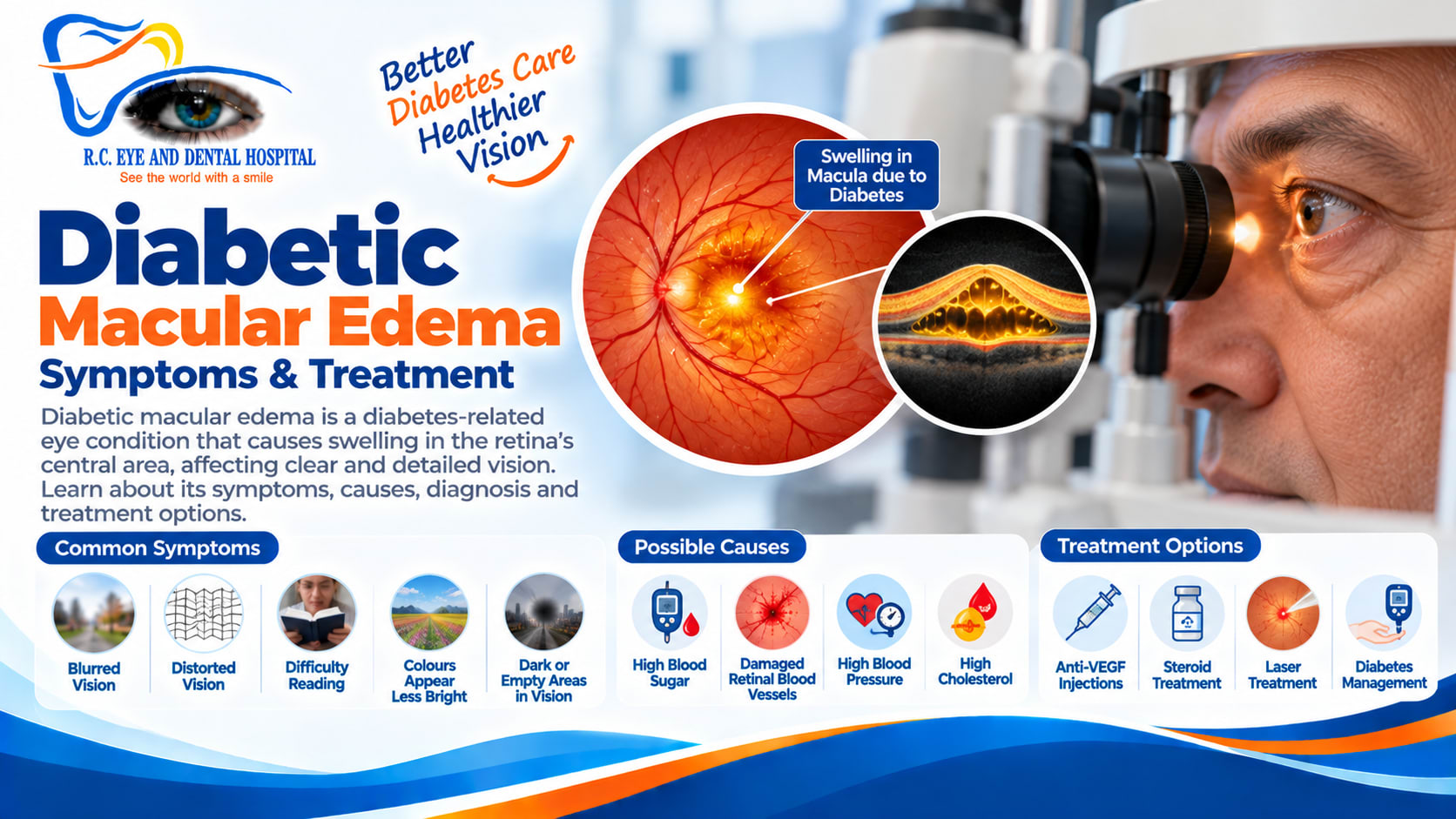
Diabetic Macular Edema: Symptoms & Treatment
R.C. Eye & Dental Hospital, Bijnor
What Is Diabetic Macular Edema?
Diabetic Macular Edema (DME) is an eye condition that can develop in people with diabetes. It occurs when fluid leaks from damaged blood vessels into the macula, the central part of the retina responsible for sharp and detailed vision.
This swelling can affect your ability to read, recognise faces, drive, and perform everyday activities. Diabetic macular edema can develop as a complication of diabetic retinopathy.
What Causes Diabetic Macular Edema?
High blood sugar levels over time can damage the tiny blood vessels in the retina. These damaged vessels may leak fluid, causing swelling in the macula.
Common risk factors include:
Poorly controlled blood sugar levels.
Long-standing diabetes.
High blood pressure.
High cholesterol levels.
Existing diabetic retinopathy.
Kidney-related health problems.
People with diabetes should have regular comprehensive eye examinations, even if they do not notice vision problems.
Common Symptoms of Diabetic Macular Edema
Symptoms may develop gradually and can affect one or both eyes.
Watch for these warning signs:
Blurred Central Vision: Difficulty seeing objects clearly.
Distorted Vision: Straight lines may appear wavy or bent.
Difficulty Reading: Trouble recognising letters or small details.
Colours Appearing Different: Colours may seem less bright than usual.
Dark or Empty Areas: Some people notice spots in their central vision.
Reduced Visual Clarity: Difficulty performing activities that require detailed vision.
In its early stages, diabetic macular edema may not cause noticeable symptoms.
How Is Diabetic Macular Edema Diagnosed?
An eye specialist may recommend:
Dilated Eye Examination: To examine the retina and identify signs of diabetic damage.
OCT Scan: Optical Coherence Tomography helps detect retinal swelling and fluid accumulation.
Fundus Photography: To document changes in the retina.
Additional Imaging: Fluorescein angiography may be recommended in selected cases to examine retinal blood vessels.
Early diagnosis helps guide appropriate treatment and monitoring.
What Are the Treatment Options for Diabetic Macular Edema?
Treatment depends on the severity of swelling and its effect on vision.
1. Anti-VEGF Injections
Anti-VEGF medicines are commonly used to reduce abnormal blood vessel leakage and retinal swelling. They are administered through injections into the eye by a trained specialist.
2. Steroid Treatment
Steroid injections or implants may be considered in selected patients when clinically appropriate.
3. Laser Treatment
Laser treatment may be recommended in certain cases depending on the location and characteristics of retinal damage.
4. Diabetes Management
Maintaining healthy blood sugar, blood pressure, and cholesterol levels is important for managing diabetic eye disease.
Regular follow-up examinations are essential to monitor treatment response.
How Can You Reduce the Risk of Diabetic Eye Damage?
Keep blood sugar levels under medical supervision.
Monitor blood pressure and cholesterol.
Follow your prescribed diabetes treatment.
Schedule regular diabetic eye examinations.
Never ignore sudden changes in vision.
Retina Care at R.C. Eye & Dental Hospital, Bijnor
Diabetic macular edema can affect central vision if left untreated. Regular retinal examinations and timely treatment are important for managing this condition.
At R.C. Eye & Dental Hospital, Bijnor, patients can seek professional eye evaluation for diabetes-related vision problems and retinal concerns.
Remember: If you have diabetes, do not wait for vision problems to appear before getting your eyes examined. Early detection can help protect your eyesight.
Need Expert Consultation?
Our specialists are here to help you with any eye or dental concern.