
Diabetic Retinopathy: Symptoms, Causes, Treatment & Prevention
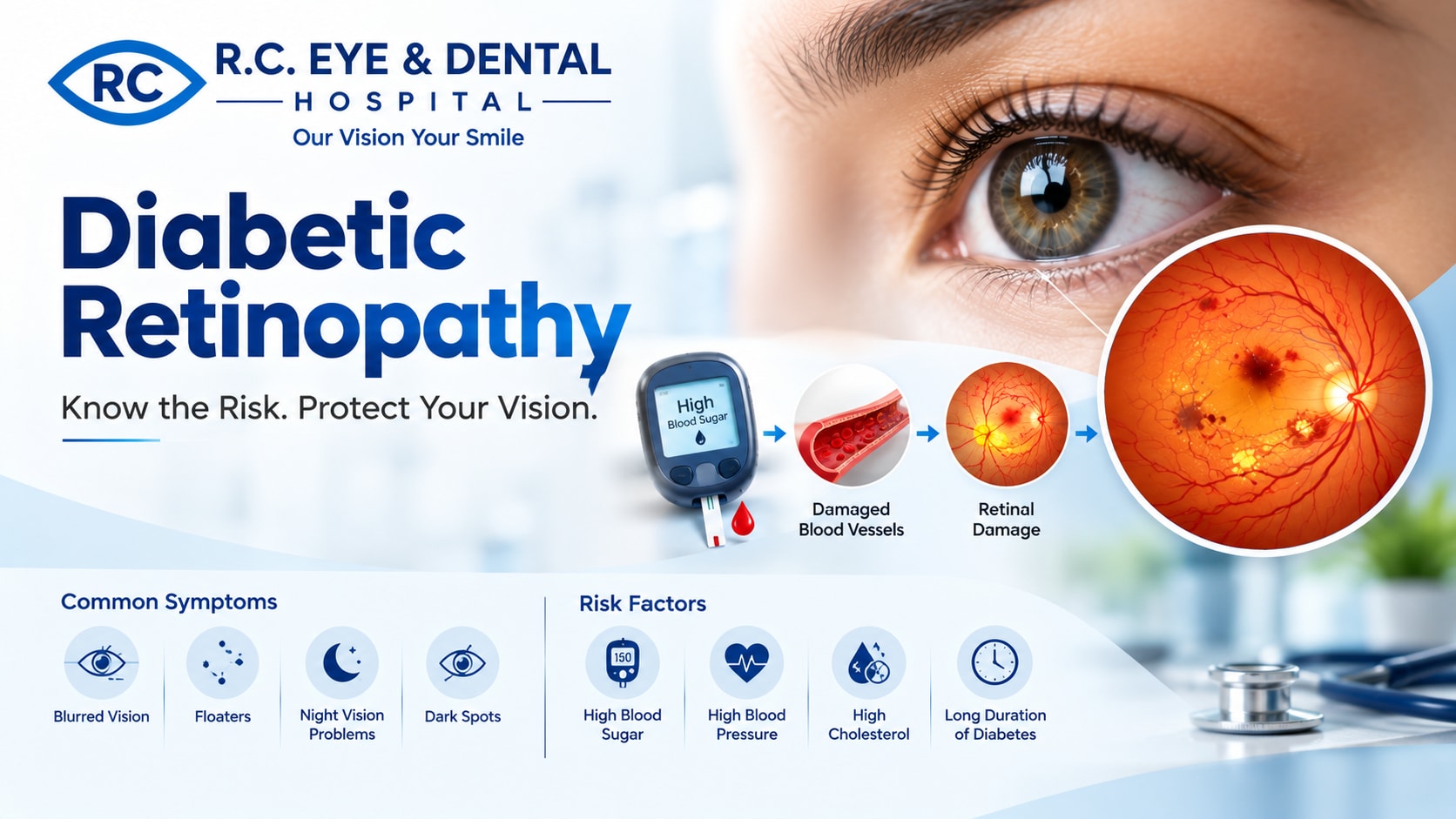
Diabetic Retinopathy: Symptoms, Causes, Treatment & Prevention
Focus Keyword: Diabetic Retinopathy
Diabetic retinopathy is a diabetes-related eye condition that can damage the retina and affect vision. It develops when high blood sugar levels over time damage the small blood vessels that supply the retina.
In the early stages, diabetic retinopathy may not cause noticeable symptoms. This is why regular eye examinations are important for people living with diabetes.
What Is Diabetic Retinopathy?
The retina is the light-sensitive layer at the back of the eye that helps convert light into signals sent to the brain. When diabetes damages the blood vessels in the retina, they may leak fluid or blood, or abnormal blood vessels may develop.
If left untreated, diabetic retinopathy can progress and may lead to serious vision problems.
Common Symptoms
Diabetic retinopathy may initially have no symptoms. As it progresses, symptoms can include:
Blurred or fluctuating vision
Dark spots or floaters
Difficulty seeing clearly
Dark or empty areas in vision
Difficulty seeing at night
Sudden changes in vision
Any sudden or significant change in vision should be evaluated by an eye specialist promptly.
Who Is at Risk?
People with diabetes are at risk of developing diabetic retinopathy. The risk can increase with:
Poorly controlled blood sugar
Long duration of diabetes
High blood pressure
High cholesterol
Smoking
Keeping diabetes and other health conditions under appropriate control can help reduce the risk of eye complications.
How Is Diabetic Retinopathy Diagnosed?
A comprehensive eye examination can help detect diabetic retinopathy, sometimes before noticeable vision changes occur.
Depending on the patient's condition, an eye specialist may examine the retina and recommend additional tests to assess retinal health.
Treatment for Diabetic Retinopathy
Treatment depends on the stage and severity of the condition. Depending on the individual case, an eye specialist may recommend:
Careful monitoring in early stages
Injections into the eye
Laser treatment
Surgery for advanced complications
The most appropriate treatment is determined after a detailed retinal evaluation.
How Can You Protect Your Vision?
If you have diabetes, regular eye check-ups are an important part of protecting your vision. You can also help reduce the risk of complications by:
Keeping blood sugar under appropriate control
Managing blood pressure and cholesterol
Taking prescribed medicines regularly
Following a healthy lifestyle
Getting regular eye examinations
Remember, diabetic retinopathy can develop without obvious symptoms, so don't wait for vision problems before getting your eyes checked.
Diabetic Eye Care at R.C. Eye & Dental Hospital
At R.C. Eye & Dental Hospital, patients receive comprehensive eye evaluation and personalized care for diabetes-related eye conditions. Early detection and appropriate management can play an important role in protecting vision.
If you have diabetes, regular retinal screening can help identify changes at an early stage and allow timely medical management.
Conclusion
Diabetic retinopathy is a potentially serious complication of diabetes, but early detection and appropriate management can help protect vision. Since the condition may not cause symptoms in its early stages, regular eye examinations are especially important for people with diabetes.
If you have diabetes or are experiencing changes in your vision, consult an eye specialist for a comprehensive eye examination.
Need Expert Consultation?
Our specialists are here to help you with any eye or dental concern.