
Gum Disease Treatment in Bijnor | Symptoms, Causes & Prevention
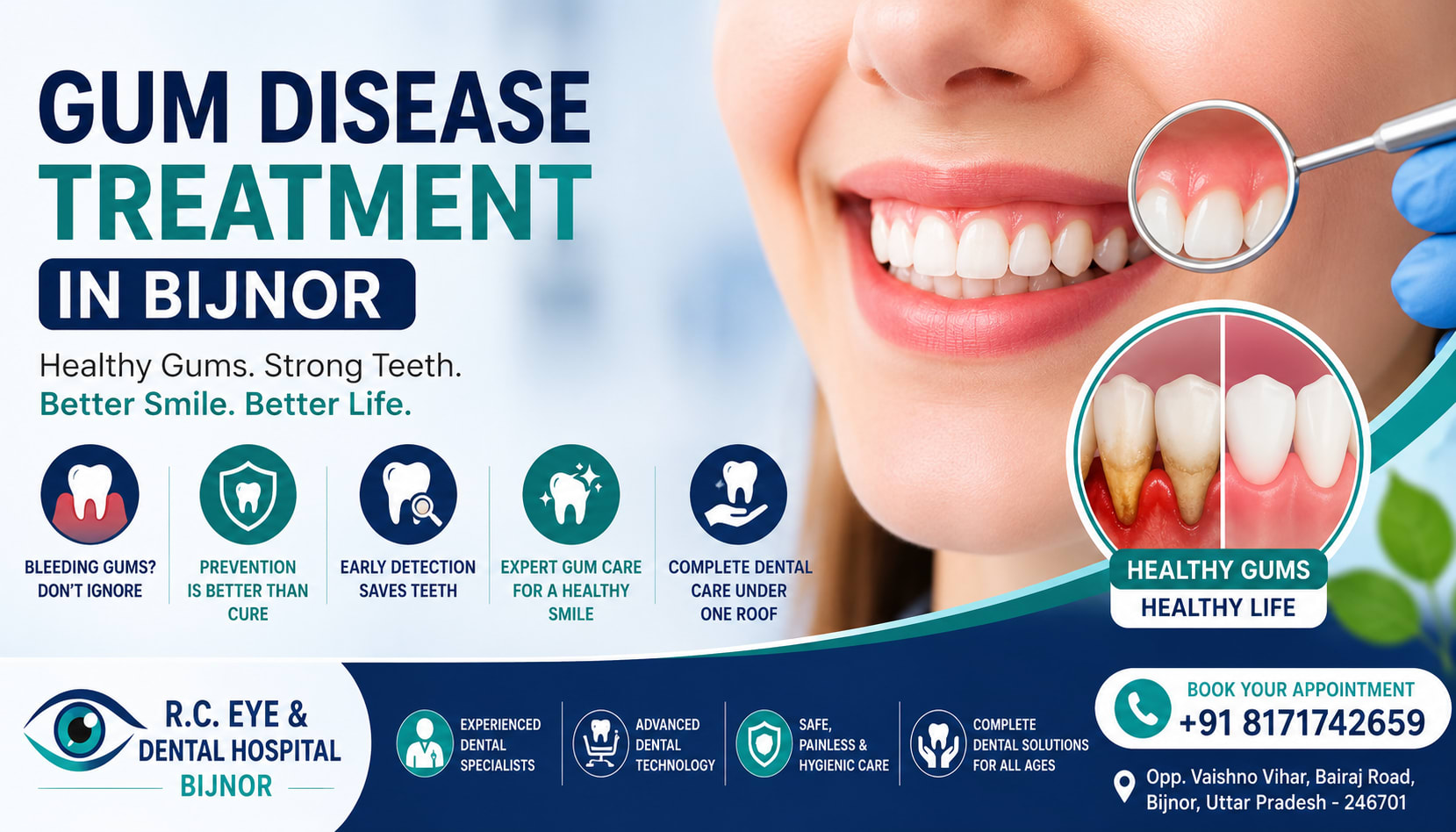
Gum Disease Treatment in Bijnor: Symptoms, Causes & Prevention
Healthy teeth are only one part of good oral health. Healthy gums are equally important because they support and protect your teeth. Problems such as bleeding gums, swelling, redness, bad breath, gum sensitivity or receding gums should not be ignored, as they may be signs of gum disease.
Gum disease can develop gradually and may not cause significant pain in its early stages. Without proper care, however, it can affect the tissues that support the teeth and may eventually contribute to loose teeth or tooth loss.
If you are looking for Gum Disease Treatment in Bijnor, getting a timely dental examination can help identify the cause of your symptoms and determine the appropriate treatment.
At R.C. Eye & Dental Hospital, Bijnor, dental services include gum care along with preventive check-ups, dental fillings and restorations, root canal treatment, extractions and cosmetic dentistry.
What Is Gum Disease?
Gum disease is an inflammatory condition that affects the gums and, in more advanced cases, the tissues and structures supporting the teeth.
It commonly begins with plaque, a sticky layer containing bacteria that forms on the teeth. When plaque is not removed properly, it can irritate the gums and cause inflammation.
Early gum problems may cause redness, swelling or bleeding while brushing. If the condition progresses without treatment, it can affect the structures supporting the teeth.
This is why recognizing the early signs of gum disease and seeking professional dental care is important.
What Causes Gum Disease?
Several factors can increase the risk of gum disease.
Plaque Build-Up
Plaque contains bacteria that can irritate the gums. If it is not removed regularly, it can contribute to gum inflammation and other dental problems.
Poor Oral Hygiene
Inadequate brushing and insufficient cleaning between the teeth can allow plaque and food particles to accumulate around the gum line.
Tobacco and Smoking
Smoking and tobacco use can negatively affect oral health and may increase the risk of gum problems.
Frequent Sugary Foods
Frequent consumption of sugary foods and drinks can contribute to plaque formation and increase the risk of various oral health problems.
Hormonal Changes
Hormonal changes can sometimes make the gums more sensitive and more prone to inflammation.
Certain Health Conditions
Some medical conditions can influence gum health and the body's response to inflammation or infection.
Irregular Dental Check-Ups
Some gum problems can develop gradually without causing severe pain. Regular dental examinations can help identify problems at an earlier stage.
Common Symptoms of Gum Disease
Gum disease does not always cause obvious symptoms initially. However, some common warning signs include:
Bleeding while brushing or flossing
Red or swollen gums
Tender or sensitive gums
Persistent bad breath
Receding gums
Increased tooth sensitivity
Pain while chewing
Changes in the way teeth fit together
Loose or shifting teeth
Unusual discharge around the gums
If you regularly experience bleeding or swollen gums, it is better to consult a dentist rather than considering it a normal part of brushing.
Why Do Gums Bleed While Brushing?
Bleeding gums can occur for different reasons, but plaque-related gum inflammation is a common cause.
When plaque accumulates around the gum line, the gums can become irritated and inflamed. This may cause them to bleed during brushing or while cleaning between the teeth.
Avoiding an area because it bleeds may allow plaque to accumulate further. Persistent gum bleeding should therefore be evaluated by a dental professional to identify the underlying cause.
Stages of Gum Disease
Gum problems can range from mild inflammation to more advanced disease.
Early Gum Inflammation
The gums may become red, swollen or bleed during brushing. Professional dental care and improved oral hygiene may help manage the problem at this stage.
Progressing Gum Disease
If inflammation continues, the tissues supporting the teeth can become affected. Spaces or pockets may develop around the teeth, making proper cleaning more difficult.
Advanced Gum Disease
In advanced cases, the structures supporting the teeth may become significantly damaged. This can contribute to loose teeth and, in severe situations, tooth loss.
Early diagnosis and appropriate treatment can help prevent gum problems from becoming more advanced.
How Is Gum Disease Treated?
The treatment depends on the severity of the gum problem and its underlying cause.
Professional Dental Cleaning
Professional dental cleaning can help remove plaque and hardened deposits that cannot be effectively removed through normal brushing.
Improved Oral Hygiene
Your dentist may recommend improvements to your brushing, flossing or interdental cleaning routine based on your individual needs.
Gum Care and Follow-Up
People with recurring gum problems may require regular dental monitoring and follow-up care.
Treatment of Other Dental Problems
If gum problems occur alongside cavities, damaged teeth or other oral health conditions, those problems may also need appropriate treatment.
For professional dental care services in Bijnor, patients can consult the dental team at R.C. Eye & Dental Hospital.
How Can You Prevent Gum Disease?
Good daily oral hygiene is one of the most important ways to protect your gums.
Brush Twice a Day
Brush your teeth twice a day using fluoride toothpaste and a suitable toothbrush.
Clean Between Your Teeth
Floss or use an appropriate interdental cleaning method to remove plaque and food particles from areas a toothbrush may not reach effectively.
Don't Ignore Bleeding Gums
Persistent gum bleeding should not be ignored. It can be a sign of inflammation or another dental problem that requires professional evaluation.
Avoid Tobacco
Avoiding smoking and tobacco products can support better oral and gum health.
Limit Frequent Sugary Foods
Reducing frequent consumption of sugary foods and drinks can help support overall oral health.
Have Regular Dental Check-Ups
Regular dental examinations can help your dentist monitor your teeth and gums and identify potential problems early.
Can Gum Disease Cause Bad Breath?
Yes. Persistent bad breath can sometimes be associated with plaque accumulation, gum inflammation or other oral health problems.
However, bad breath can have several causes. If it continues despite regular brushing and cleaning, a dental examination can help determine the underlying reason.
Can Gum Disease Affect Your Teeth?
Yes. Healthy gums play an important role in supporting the teeth.
When gum disease becomes advanced, the tissues and structures supporting the teeth may become damaged. This can contribute to tooth mobility and, in severe cases, tooth loss.
Therefore, gum health should be considered an important part of overall dental care, rather than something to address only when pain develops.
When Should You Visit a Dentist?
You should consider scheduling a dental examination if you experience:
Frequent bleeding gums
Swollen or red gums
Persistent bad breath
Gum sensitivity
Receding gums
Loose teeth
Pain while chewing
Persistent tooth sensitivity
Changes in your bite
Any unusual changes around your gums
If you are searching for a dentist in Bijnor, you can explore the dental specialists at R.C. Eye & Dental Hospital.
Gum Care at R.C. Eye & Dental Hospital, Bijnor
Choosing the right dental-care provider is important when you experience recurring gum problems.
R.C. Eye & Dental Hospital, Bijnor provides comprehensive dental care, including gum care, preventive dental services, restorations, root canal treatment, extractions and cosmetic dentistry.
The hospital's dental team includes Dr. Surbhi R. Agarwal, Senior Dentist. Her listed areas of dental care include gum care along with root canal treatment, whitening, cosmetic dentistry, extractions and restorations.
Patients can discuss their symptoms with the dental team and receive treatment recommendations based on their individual oral health.
Gum Health and Overall Oral Hygiene
Taking care of your gums is not only about preventing bleeding. Healthy gums contribute to a healthy mouth and provide important support to your teeth.
A good daily oral-care routine should include:
Brushing twice daily
Cleaning between your teeth
Limiting frequent sugary foods
Avoiding tobacco
Drinking enough water
Having regular dental examinations
Seeking professional advice when symptoms persist
Small daily habits can make an important difference to long-term oral health.
Frequently Asked Questions About Gum Disease
What is the most common sign of gum disease?
Bleeding or swollen gums can be an early warning sign. Other symptoms may include redness, bad breath, gum sensitivity and changes around the teeth.
Are bleeding gums normal?
Persistent bleeding gums should not simply be ignored. They may indicate gum inflammation or another oral health problem and should be evaluated by a dentist.
Can gum disease be prevented?
Good oral hygiene, regular dental check-ups, avoiding tobacco and maintaining healthy dietary habits can help reduce the risk of gum disease.
Can gum disease cause tooth loss?
Advanced gum disease can damage the tissues and structures supporting the teeth, which may contribute to loose teeth and tooth loss.
Can gum disease cause bad breath?
Yes. Gum inflammation and plaque accumulation can contribute to persistent bad breath. However, bad breath can also have other causes.
How often should I visit a dentist?
The appropriate frequency depends on your individual oral health. Regular dental examinations allow your dentist to monitor your teeth and gums and recommend a suitable follow-up schedule.
Where can I get Gum Disease Treatment in Bijnor?
If you are looking for Gum Disease Treatment in Bijnor, you can consult the dental team at R.C. Eye & Dental Hospital for an examination and personalized treatment guidance.
Don't Ignore Bleeding or Swollen Gums
Gum problems can start with mild symptoms such as occasional bleeding, redness or sensitivity. Ignoring these signs may allow the condition to progress and affect the tissues supporting your teeth.
Maintaining good oral hygiene, having regular dental examinations and seeking professional advice when symptoms persist can help protect your gums and teeth.
If you are experiencing bleeding gums, swelling, persistent bad breath or gum sensitivity, consider scheduling a dental examination.
For patients looking for Gum Disease Treatment in Bijnor, R.C. Eye & Dental Hospital provides comprehensive dental care and gum-care services.
Book Your Dental Consultation
R.C. Eye & Dental Hospital, Bijnor
Opp. Vaishno Vihar, Bairaj Road, Bijnor, Uttar Pradesh – 246701
For Appointment & Consultation:
+91 8171742659
Book your consultation and take the first step towards healthier gums and a healthier smile.
Need Expert Consultation?
Our specialists are here to help you with any eye or dental concern.