
Macular Degeneration: Symptoms, Causes & Risk Factors
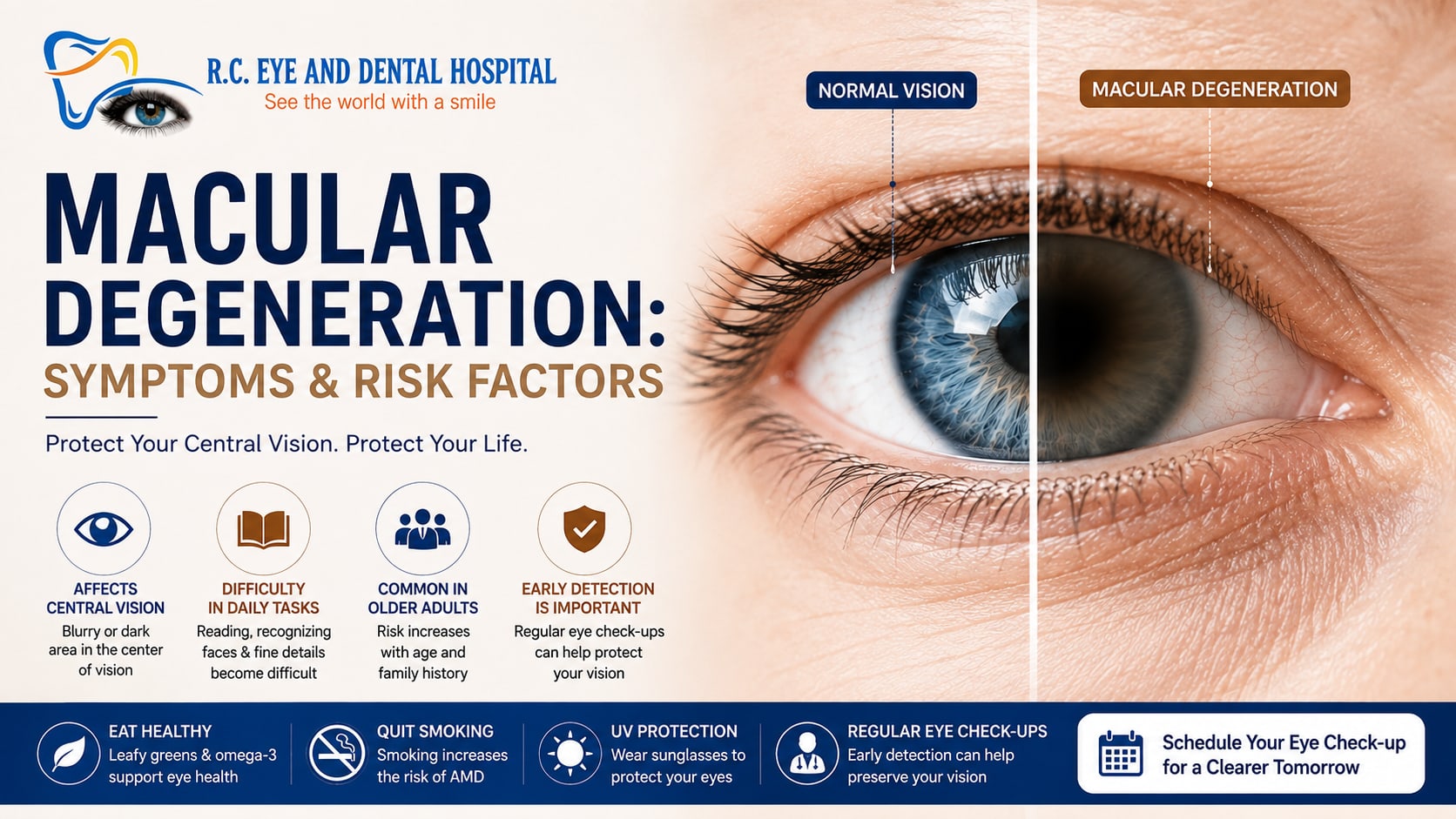
Macular Degeneration: Symptoms, Causes & Risk Factors
Macular degeneration is an eye condition that affects the macula, the central part of the retina responsible for sharp, detailed vision. It is more commonly associated with ageing and can make activities such as reading, recognizing faces, or seeing fine details difficult.
The condition mainly affects central vision, while peripheral or side vision may remain relatively unaffected.
What Is Macular Degeneration?
The macula helps us see objects clearly and in detail. When the macula becomes damaged, central vision can become distorted, blurred, or less clear.
Age-related macular degeneration (AMD) is the most common form. It can develop gradually, and early stages may not always cause noticeable symptoms.
Common Symptoms
Symptoms can vary depending on the type and stage of macular degeneration. They may include:
- Blurred or reduced central vision
- Difficulty reading small print
- Straight lines appearing wavy or distorted
- Difficulty recognizing faces
- A blurry or dark area in the centre of vision
- Difficulty seeing details in low light
If you notice a sudden change in central vision or straight lines suddenly appear distorted, an eye examination should be arranged promptly.
Risk Factors
The risk of age-related macular degeneration can increase with:
Age
The risk generally increases as people get older, making regular eye examinations particularly important for older adults.
Family History
Having a family history of macular degeneration may increase the risk.
Smoking
Smoking is an important modifiable risk factor associated with AMD. Avoiding tobacco can support overall eye health.
Cardiovascular and Lifestyle Factors
Certain cardiovascular health factors and an unhealthy lifestyle may also contribute to the risk of developing AMD.
How Is Macular Degeneration Detected?
A comprehensive eye examination can help identify changes in the macula and overall retinal health.
An eye specialist may examine the retina and recommend additional tests when required. Regular examinations are particularly important for people who have risk factors or a family history of macular degeneration.
Can Macular Degeneration Be Treated?
Treatment depends on the type and stage of macular degeneration.
Some forms may require regular monitoring, while certain types of AMD can be treated with specialist treatments such as medicines delivered by injections into the eye.
Early detection is important because appropriate management can help protect vision and reduce the risk of further vision loss in suitable cases.
How Can You Protect Your Eye Health?
You can support your eye health by:
- Getting regular eye examinations
- Avoiding smoking
- Maintaining a healthy lifestyle
- Managing conditions such as high blood pressure as advised by your doctor
- Reporting new or sudden changes in vision promptly
Eye Care at R.C. Eye & Dental Hospital
At R.C. Eye & Dental Hospital, patients can receive comprehensive eye evaluations for vision changes and retinal conditions. The focus is on appropriate examination, early detection, personalized treatment planning, and patient care.
If you experience changes in your central vision, especially persistent blurring or distortion, an eye examination can help identify the underlying cause.
Conclusion
Macular degeneration can affect the central vision needed for reading, recognizing faces, and seeing fine details. Age is an important risk factor, but family history, smoking, and certain health and lifestyle factors can also contribute.
Because early macular changes may not always produce obvious symptoms, regular eye examinations are important—particularly for people at higher risk.
Need Expert Consultation?
Our specialists are here to help you with any eye or dental concern.