
Milk Teeth Care: How to Take Care of Your Child’s Baby Teeth
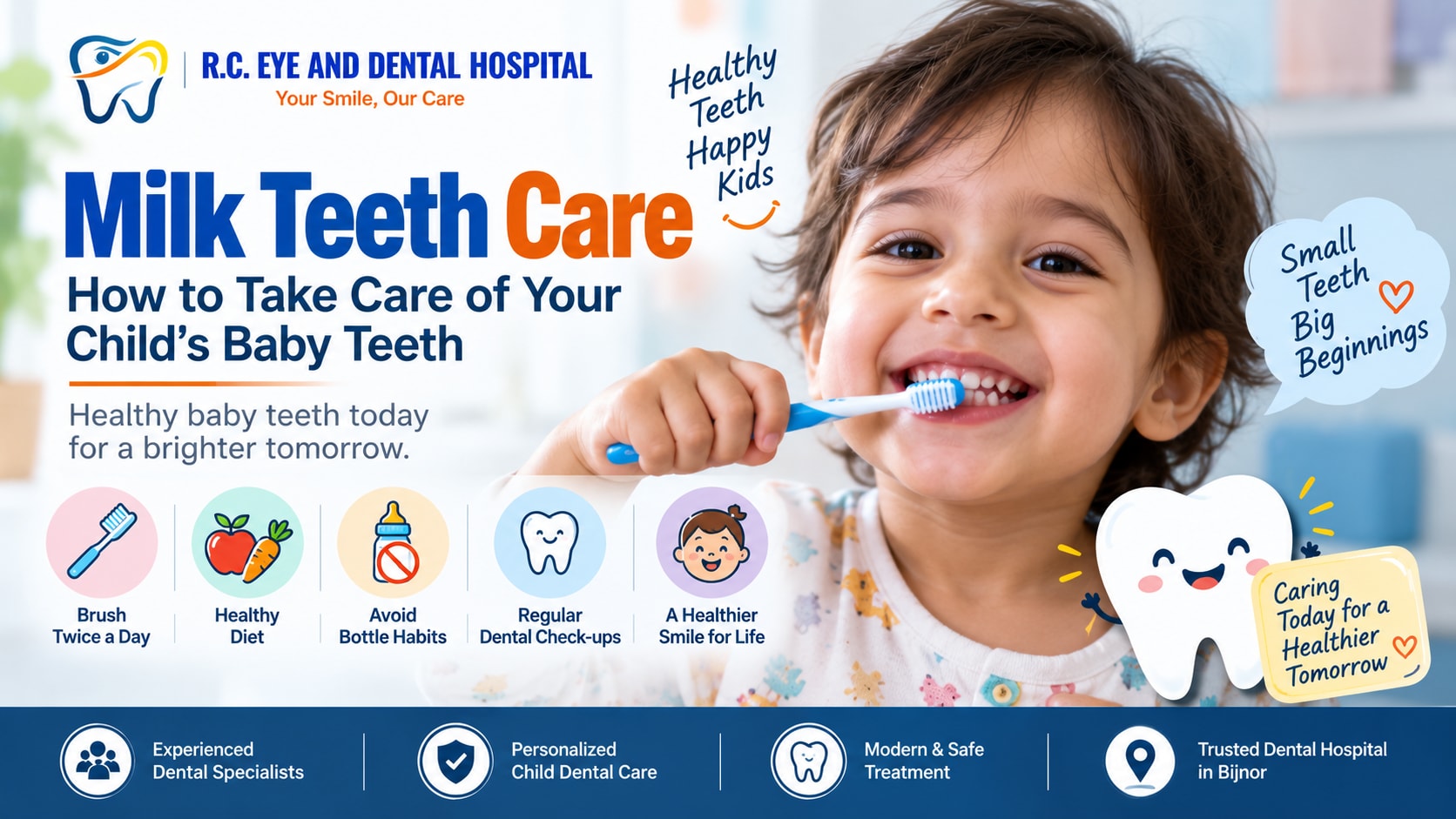
Milk Teeth Care: Why Baby Teeth Matter
Milk teeth, also called baby teeth, are temporary but important for a child’s development. They help children chew food, speak properly and maintain space for permanent teeth.
That is why starting good Milk Teeth Care habits early is important—even though these teeth will eventually fall out.
How to Take Care of Your Child’s Milk Teeth
1. Start Brushing Early
Parents should begin cleaning their baby’s teeth as soon as the first tooth appears. Use a soft, age-appropriate toothbrush and a suitable amount of fluoride toothpaste according to the child’s age and dental guidance.
As young children may not brush effectively on their own, parents should help or supervise brushing.
2. Brush Twice a Day
Make brushing a regular morning and bedtime routine. Gentle brushing helps remove food particles and plaque from the teeth and gums.
Bedtime brushing is particularly important because leaving food or sugary drinks on the teeth overnight can increase the risk of tooth decay.
3. Limit Sugary Foods and Drinks
Frequent consumption of sweets, chocolates, biscuits, sugary drinks and other sweet foods can increase the risk of cavities.
Instead, encourage nutritious meals and snacks, and make water the preferred drink between meals.
4. Avoid Putting a Baby to Sleep With a Milk or Sweetened Bottle
Allowing a child to sleep while continuously sucking on a bottle containing milk or sugary liquids can increase the risk of early childhood tooth decay.
Clean the child’s teeth before bedtime and follow your dentist’s advice about feeding and oral hygiene.
5. Do Not Share Spoons or Clean Pacifiers With Your Mouth
Parents should avoid practices that can transfer bacteria from their mouth to the child, such as sharing eating utensils or cleaning a pacifier by putting it in their own mouth.
6. Make Dental Visits Part of Routine Care
Do not wait until a child develops tooth pain to visit a dentist. Regular dental check-ups can help identify early signs of tooth decay and other dental problems.
A dentist can also guide parents about brushing, diet, fluoride use and age-appropriate oral hygiene.
What If a Milk Tooth Gets a Cavity?
A common mistake is thinking that cavities in milk teeth do not need treatment because these teeth will eventually fall out.
Untreated decay can cause pain, infection and difficulty eating. In some cases, it may also affect the developing permanent teeth or cause problems with the normal eruption pattern.
The appropriate treatment depends on the child’s age, the condition of the tooth and the extent of decay.
Simple Daily Routine for Parents
A healthy Milk Teeth Care routine can be simple:
Morning: Brush → Healthy breakfast
During the day: Limit frequent sugary snacks → Drink water
Night: Brush → Avoid sugary drinks after brushing → Bedtime
Most importantly, make brushing a supervised and positive habit rather than a punishment.
Children’s Dental Care at R.C. Eye & Dental Hospital, Bijnor
At R.C. Eye & Dental Hospital, Bijnor, parents can seek professional guidance for their child’s dental health, including concerns related to milk teeth, cavities and oral hygiene.
Healthy baby teeth help build the foundation for a healthy smile. Start good dental habits early and make regular dental care a part of your child’s routine.
:::
Need Expert Consultation?
Our specialists are here to help you with any eye or dental concern.