
Tooth Extraction: When Is It Necessary? Causes & Aftercare
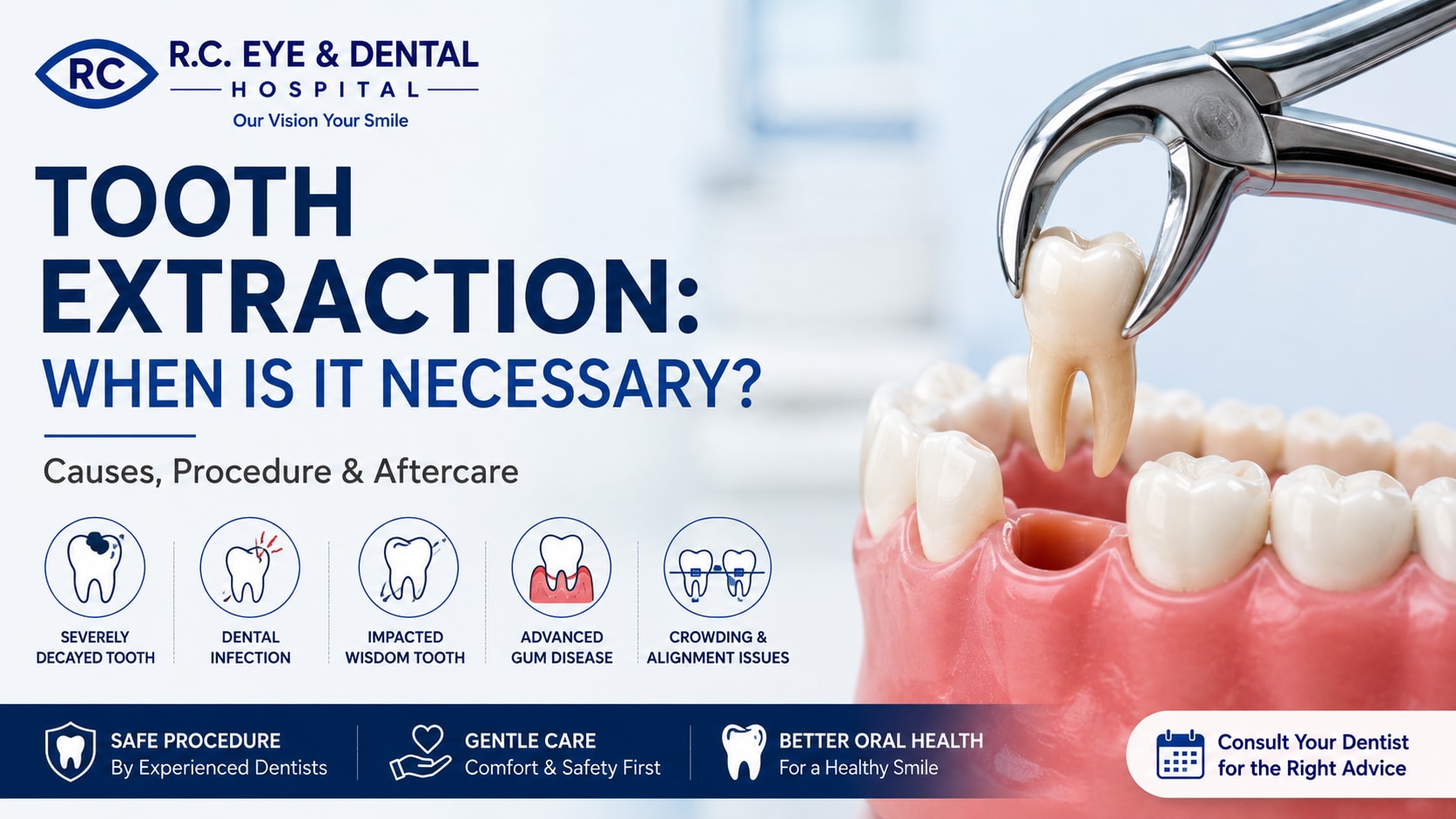
Tooth Extraction: When Is It Necessary?
A natural tooth is usually preserved whenever possible. However, in some situations, tooth extraction may be necessary to protect your oral health and prevent further dental problems.
Extraction involves removing a tooth that cannot be effectively restored or is causing problems for the surrounding teeth and gums. A dentist will first examine the tooth and recommend extraction only when it is considered appropriate.
When Is Tooth Extraction Necessary?
Some common reasons for tooth extraction include:
Severely Damaged or Decayed Tooth
A tooth with extensive decay or damage may sometimes be beyond repair. If it cannot be restored with a filling, crown, or other treatment, extraction may be considered.
Dental Infection
A severely infected tooth may sometimes require extraction, particularly when the tooth cannot be successfully treated or restored. Treating the underlying infection is important to prevent complications.
Impacted Wisdom Tooth
Wisdom teeth may not have enough space to grow properly. An impacted wisdom tooth can cause pain, swelling, infection, or problems with nearby teeth and may require removal.
Crowded Teeth
In certain dental treatment plans, removing a tooth may be recommended to create adequate space and support proper alignment.
Advanced Gum Disease
Severe gum disease can weaken the tissues and bone supporting a tooth. If a tooth becomes too loose or cannot be maintained, extraction may sometimes be necessary.
What Happens Before Tooth Extraction?
Before extraction, the dentist examines the tooth and surrounding area. Depending on the situation, dental X-rays may be recommended to understand the tooth's position and condition.
The dentist will discuss the procedure and explain any necessary precautions before treatment.
Tooth Extraction Aftercare
Following your dentist's instructions after extraction is important for proper healing. General aftercare may include:
- Keep the extraction area clean as advised.
- Avoid disturbing the area with your tongue or fingers.
- Follow the prescribed medicines and instructions.
- Choose suitable foods during the initial recovery period.
- Avoid smoking or tobacco products during healing.
- Attend follow-up appointments if recommended.
If you experience severe pain, increasing swelling, prolonged bleeding, fever, or other unusual symptoms, contact your dentist promptly.
Can Every Problematic Tooth Be Extracted?
Not necessarily. Tooth extraction is not always the first choice. Depending on the condition of the tooth, treatments such as fillings, crowns, root canal treatment, or other restorative procedures may be possible.
A dental examination is therefore important before deciding whether a tooth should be removed.
Dental Care at R.C. Eye & Dental Hospital
At R.C. Eye & Dental Hospital, the focus is on preserving natural teeth whenever possible and providing treatment according to each patient's individual dental condition.
Before recommending tooth extraction, the dental team evaluates the tooth and surrounding structures and discusses suitable treatment options with the patient.
Conclusion
Tooth extraction may be necessary when a tooth is severely damaged, infected, impacted, or cannot be successfully restored. However, removing a tooth should be based on a proper dental examination and professional treatment planning.
If you are experiencing persistent tooth pain, swelling, a damaged tooth, or problems with a wisdom tooth, consult a dentist for an appropriate evaluation and treatment plan.
Need Expert Consultation?
Our specialists are here to help you with any eye or dental concern.