
Uveitis: Causes, Symptoms & Treatment
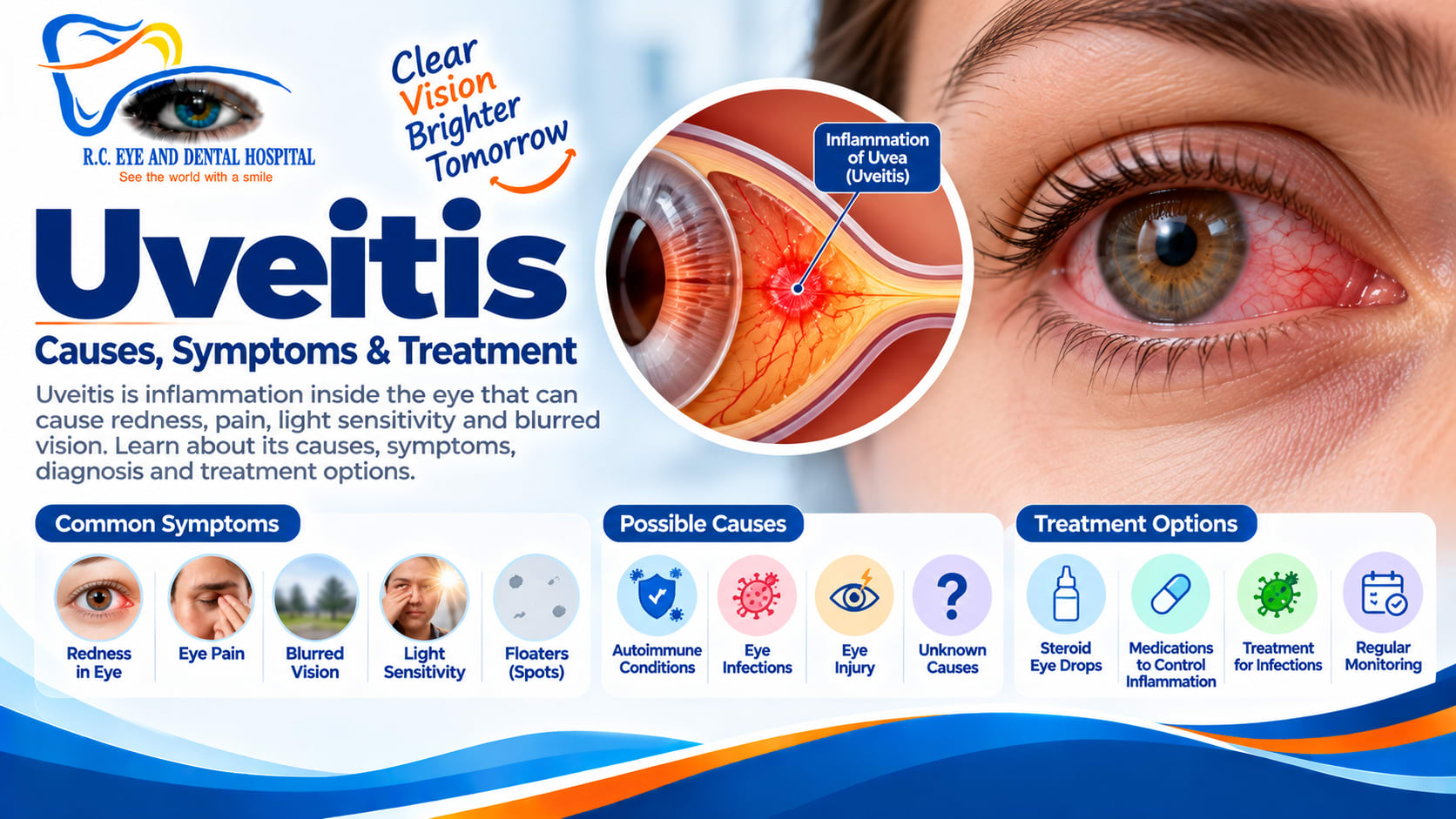
Uveitis: Causes, Symptoms & Treatment
R.C. Eye & Dental Hospital, Bijnor
What Is Uveitis?
Uveitis is inflammation of the uvea, the middle layer of the eye that contains important blood vessels. It can affect different parts of the eye and may develop suddenly or gradually.
Uveitis can cause eye discomfort and vision problems. If left untreated, certain types may lead to serious complications, including glaucoma, cataracts, or permanent vision loss.
What Causes Uveitis?
Uveitis can develop due to several reasons, including:
1. Autoimmune Conditions
Certain autoimmune diseases, such as rheumatoid arthritis and ankylosing spondylitis, may be associated with eye inflammation.
2. Eye Infections
Some infections caused by viruses, bacteria, fungi, or parasites can trigger uveitis.
3. Eye Injury
An injury or trauma to the eye may sometimes lead to inflammation.
4. Unknown Causes
In many cases, the exact cause of uveitis cannot be identified.
Common Symptoms of Uveitis
The symptoms may vary depending on which part of the eye is affected. Common warning signs include:
Eye Redness: Redness that may not improve on its own.
Eye Pain: Discomfort or aching inside the eye.
Blurred Vision: Difficulty seeing objects clearly.
Light Sensitivity: Discomfort when exposed to bright light.
Floaters: Small spots or thread-like shapes appearing in your vision.
Reduced Vision: Changes in vision that may worsen without treatment.
Some types of uveitis may develop without noticeable pain or redness.
What Are the Different Types of Uveitis?
Uveitis is classified according to the part of the eye affected.
Anterior Uveitis: Inflammation affecting the front part of the eye, including the iris.
Intermediate Uveitis: Inflammation mainly affecting the middle portion of the eye.
Posterior Uveitis: Inflammation involving the retina or choroid.
Panuveitis: Inflammation affecting multiple parts of the uvea.
How Is Uveitis Diagnosed and Treated?
An eye specialist may perform a detailed eye examination, check vision, examine the inside of the eye, and recommend additional tests to identify the underlying cause.
Treatment depends on the type and severity of inflammation and may include:
Steroid Eye Drops: Used in selected cases to control inflammation.
Other Anti-inflammatory Medicines: Prescribed according to the condition.
Antimicrobial Treatment: Used when an infection is responsible.
Advanced Treatment: Certain cases may require injections or systemic medication.
Regular Monitoring: Follow-up examinations help monitor inflammation and possible complications.
Never use steroid eye drops without medical supervision, as they may worsen certain eye infections.
When Should You Consult an Eye Specialist?
If you experience eye pain, redness, blurred vision, or sensitivity to light, seek an eye examination promptly.
Sudden vision loss or significant changes in vision require urgent medical attention. Early diagnosis and appropriate treatment can help reduce the risk of complications.
Eye Care at R.C. Eye & Dental Hospital, Bijnor
Uveitis is an eye condition that should not be ignored. Timely diagnosis can help identify the cause of inflammation and guide appropriate treatment.
At R.C. Eye & Dental Hospital, Bijnor, patients can seek professional eye evaluation for redness, eye pain, blurred vision, and other eye-related concerns.
Remember: Do not ignore persistent eye inflammation or sudden changes in vision. Timely consultation with an eye specialist is important for protecting your eyesight.
Need Expert Consultation?
Our specialists are here to help you with any eye or dental concern.