
Wisdom Tooth Pain: Causes, Symptoms, Treatment & When to Remove It
What Is a Wisdom Tooth?
Wisdom teeth are the last set of molars at the back of the mouth. They usually appear during the late teenage years or early twenties.
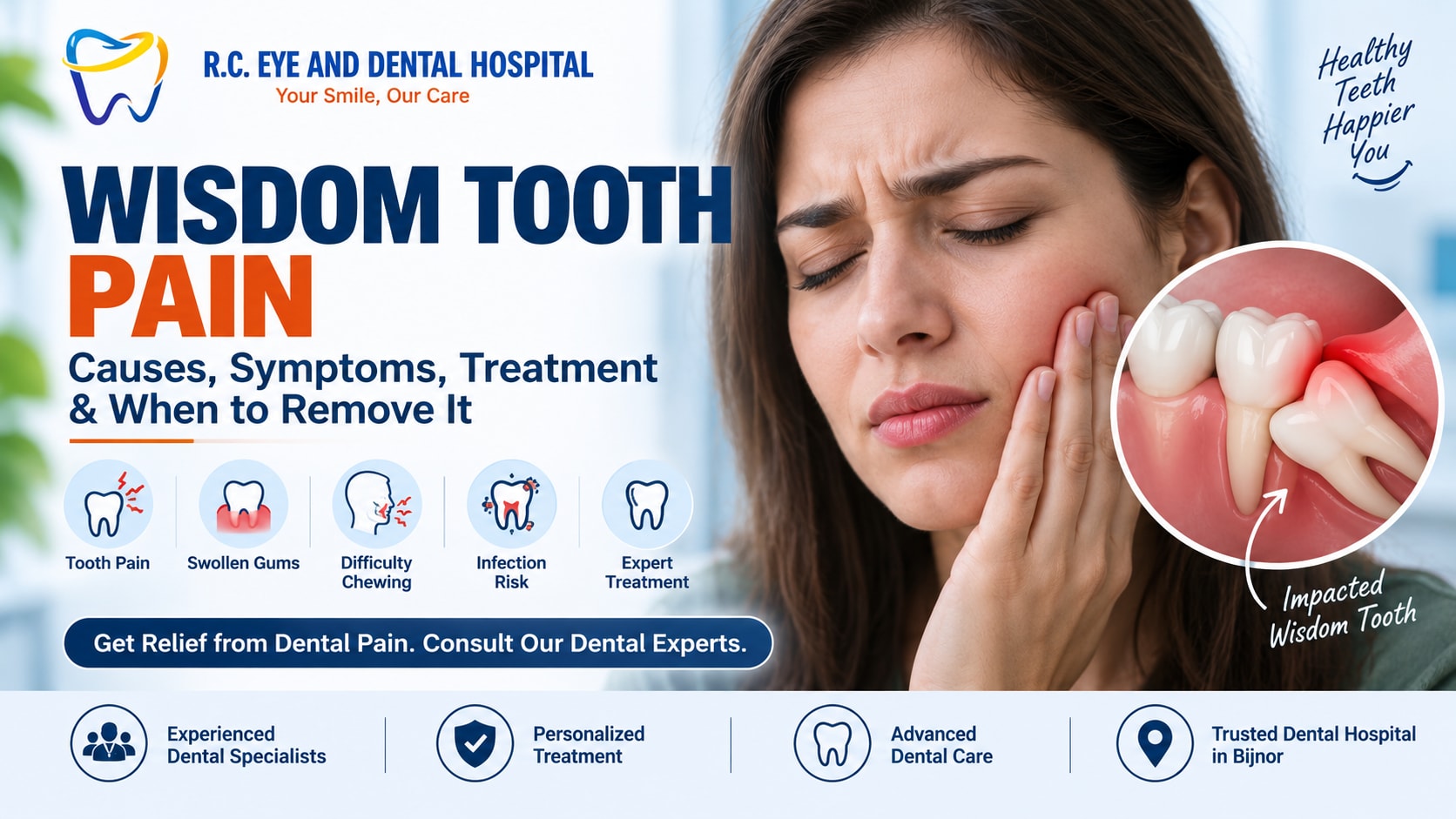
Because they develop later, there may not always be enough space for them to grow properly. A wisdom tooth may become tilted, partially erupted, or remain trapped under the gum or bone.
These problems can lead to wisdom tooth pain, swelling, infection, or difficulty cleaning the area.
What Causes Wisdom Tooth Pain?
Common causes include:
Lack of Space
When there is not enough room in the jaw, the wisdom tooth may press against nearby teeth or fail to erupt properly.
Impacted Wisdom Tooth
An impacted wisdom tooth cannot emerge normally because it is blocked by gum, bone, or another tooth.
Gum Infection
A partially erupted wisdom tooth can leave a flap of gum where food and bacteria become trapped, causing pain, swelling, redness, bad breath, or an unpleasant taste.
Tooth Decay
Wisdom teeth are difficult to clean because of their location at the back of the mouth. This can increase the risk of plaque buildup and decay.
Common Symptoms
Wisdom tooth problems may cause:
- Pain at the back of the mouth
- Swollen or tender gums
- Pain while chewing
- Difficulty opening the mouth
- Bad breath or unpleasant taste
- Jaw or facial swelling
- Repeated gum infections
If these symptoms keep returning, a dental examination is recommended.
How Is It Diagnosed?
A dentist will examine the tooth and surrounding gums. A dental X-ray may also be recommended to check the position of the wisdom tooth and its relationship with nearby teeth.
This helps the dentist decide whether the tooth should be monitored, treated, or removed.
Does Every Wisdom Tooth Need to Be Removed?
No. A healthy wisdom tooth that is properly positioned, functional, and easy to maintain may not need removal.
Removal may be considered when a wisdom tooth:
- Causes repeated infections
- Has significant decay
- Causes persistent pain
- Is severely impacted
- Affects or damages a neighboring tooth
- Cannot be maintained properly
The decision should be made after a proper dental examination.
Wisdom Tooth Removal & Aftercare
Wisdom tooth removal is generally performed under local anesthesia. Some soreness and swelling may occur after the procedure.
After removal, follow your dentist's instructions carefully. You may be advised to:
- Eat soft foods initially
- Keep the area clean as instructed
- Avoid touching the treatment area
- Take prescribed medicines as directed
- Avoid smoking and tobacco during healing
If you experience severe pain, excessive bleeding, increasing swelling, or fever, contact your dentist promptly.
When Should You See a Dentist?
Don't ignore wisdom tooth pain if it:
- Persists or keeps returning
- Causes gum or facial swelling
- Makes chewing difficult
- Causes difficulty opening your mouth
- Occurs with fever or signs of infection
Severe swelling or difficulty swallowing or breathing requires urgent medical or dental attention.
Wisdom Tooth Treatment in Bijnor
If you are experiencing wisdom tooth pain in Bijnor, a dental examination can help identify the cause and determine the most suitable treatment.
At R.C. Eye & Dental Hospital, patients can receive professional evaluation and personalized treatment for wisdom tooth problems and other dental concerns.
Conclusion
Wisdom Tooth Pain can be caused by lack of space, impaction, infection, decay, or pressure on nearby teeth. Not every wisdom tooth needs to be removed, but persistent or recurring symptoms should be evaluated by a dentist.
Early examination can help identify the problem and determine whether monitoring, treatment, or wisdom tooth removal is appropriate.
Need Expert Consultation?
Our specialists are here to help you with any eye or dental concern.